 XOOL
XOOLLeather tears at a grommet when the cut was forced
Rough holes and ragged edges stretch until the metal ring pulls out of the strap. This note covers what happens to leather under tension, how a clean cut seats the metal, and where our punches, grommets and leather tools shelf fits into the work.
A loose metal ring hanging off a frayed belt strap usually means the opening started tearing before the barrel ever flared. Pushing metal through a slit or a squeezed nick leaves tiny fractures in the hide. Once the strap takes daily pull, those pinched fibers part ways, widen under tension, and slide right past the flange. The hardware did not fail on its own; the opening underneath gave up first.
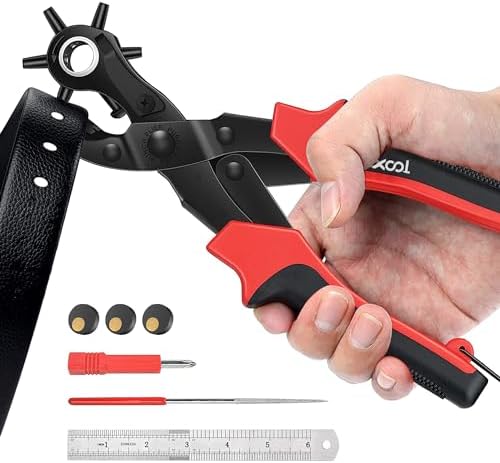
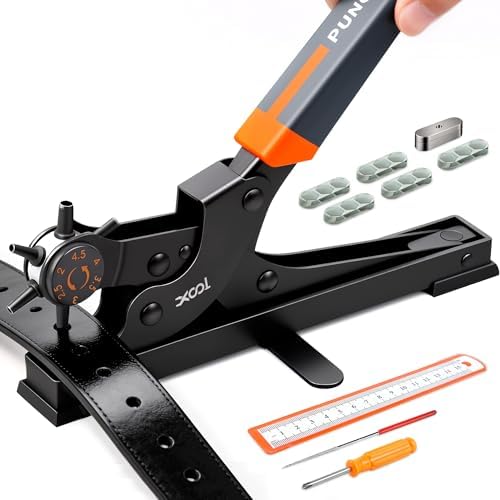
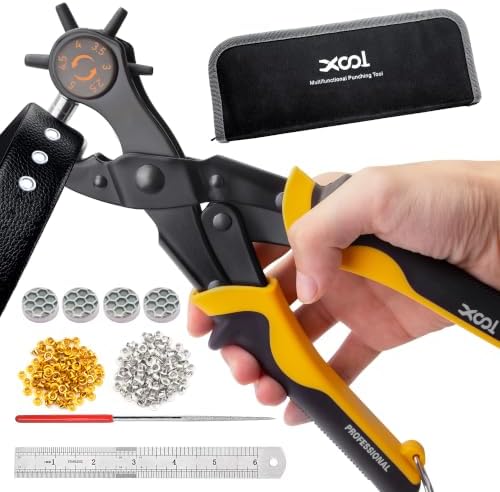
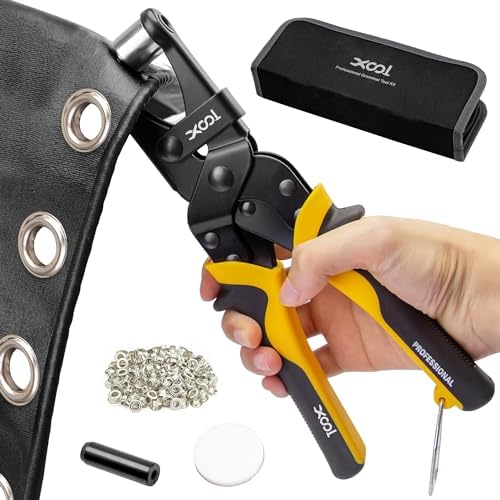
The real trouble comes down to how the circle was made. Slicing through the grain spreads the load unevenly across split strands, while a true circular cut leaves a continuous wall that supports the barrel all the way around. Our punches, grommets and leather tools shelf carries eight tools built to punch round holes and seat hardware flat, because keeping metal locked in place depends on the opening you cut.
Stress gathers at the cut edge before moving outward
Metal holds its shape under a buckle, but hide stretches along the lines of the grain. When tension pulls against the inner ring, the entire load lands on the narrow rim of leather touching the brass or steel barrel. An opening punched through cleanly meets that pressure with full surface contact, letting the hide compress as one solid wall against the metal collar.
Nick one spot along that inner circle and the whole dynamic shifts. Instead of sharing the tug across the entire perimeter, tension funnels directly into that small notch. The hide stretches unevenly, opening a tiny gap that grows longer with every tug of the strap. Once that rip travels past the flared rim, the hardware drops out without the metal ever bending.
A pushed opening starts tearing before the metal goes in
A cut removes a plug of material completely. Look closely at the circle and you see flat walls that drop straight through the strap, with grain matching the surface all the way to the rim. When an opening is made by wedging the fibers apart instead of lifting a disk out, the wall bulges outward. The rim puckers and turns pale where the hide took the strain.
That pale ring is grain that has yielded. Once you press metal through an opening made that way, the collar sits on bunched fibers instead of resting against a flat face. Pull on the strap and the pressure concentrates right where those fibers were already pulled apart. On our punches, grommets and leather tools shelf, the tools take that plug out whole.
Placing the hole too close to a finished edge
Punching too near a border leaves a narrow band of hide that carries the entire load when the piece is buckled. Even if the cutout itself is clean, a rim set right against the perimeter stretches sideways under tension. The dense outer grain needs enough surrounding body to spread the pulling force across the wider strap rather than concentrating every ounce of strain onto a thin strip of leather.
Worked spots where the hide was skived down, creased, or repeatedly bent lack the substance needed to anchor a flared barrel. Setting metal into soft, tired flesh invites the flange to tilt as soon as weight comes onto it. Solid hide around the full circumference keeps the rim level, while thinned patches collapse underneath and let the hardware work itself loose over time.
What sits beneath the leather changes the whole cut
Setting up on a surface with too much give lets the hide dip downward before the edge bites through. Soft backing bends beneath the blow, stretching the bottom grain into a dish shape while the top tries to hold its ground. Instead of shearing across the fibers, the edge tears through the lower face on an angle. The opening ends up funnel shaped, with half the back edge already pulled thin.
Solid backing holds the hide level so the punch shears straight down against the base. Placing a scrap board beneath the work gives the edge a firm plane to strike without dulling against metal. That resistance keeps the strap from sinking out of alignment, leaving both sides of the circle clean. Our punches, grommets and leather tools shelf holds eight tools built around that same flat support.
Choosing between stitching, eyelets, and hardware
Leatherwork moves between piercing holes for thread and securing metal through thick hide. On our punches, grommets and leather tools shelf, we keep eight tools that span revolving pliers, wide metal punches, and chisel kits for stitching lines. We build them so you can cut clear through belts, straps, and heavy fabric without pulling at the surrounding grain.