 XOOL
XOOLColored rubber grips tell you nothing about insulation
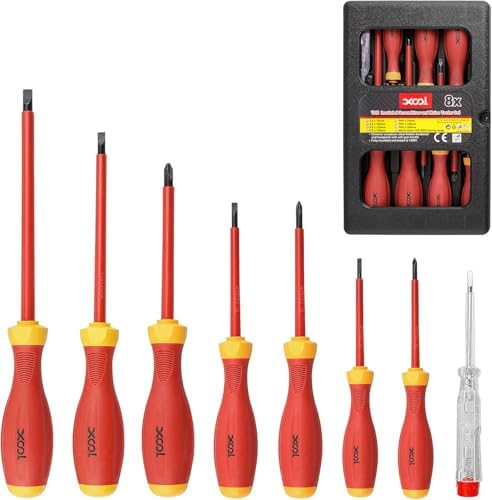
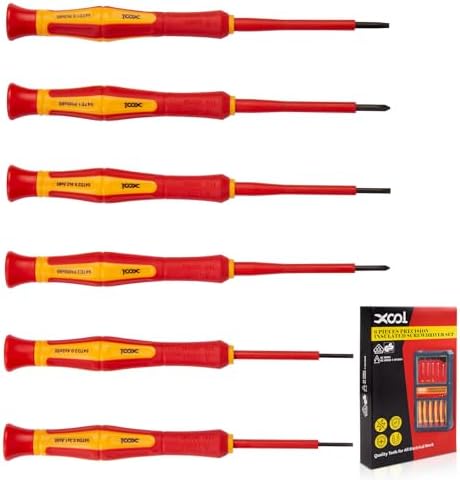
Bright coatings and soft plastic give a hand something to grip, but color is not a rating. We make two insulated sets built for electrical work, and looking at the handle of an ordinary driver will not tell you if it belongs on that shelf.
You have a driver with a thick red sleeve or a soft yellow grip, and you paused before turning it. The grip feels substantial under your palm, completely covering the butt end. It seems different from a bare steel shank. Wondering if that dip in rubber makes the piece fit for live work is a common hesitation when facing an unfamiliar task.
Gripping material exists to help your palm turn the shaft without twisting raw metal into skin. Cushioning and high contrast tones are shop choices for comfort or finding a lost piece on a dark bench. We build two insulated sets on our standard and insulated screwdrivers shelf for electrical work, but surface texture alone cannot answer for a tool.
What handle material and coloring actually show
Molded plastic shapes and soft outer layers show how a tool fits fingers, not what the piece withstands. When we pick bright pigments, those coats help someone spot a dropped handle on a lawn or inside an open toolbox. Contoured grips give leverage against stubborn fasteners so palms do not slip against bare metal. That external coat remains an aid for turning.
Every maker settles on colors to mark separate lines or help an owner sort flat heads from cross tips at a glance. Our standard and insulated screwdrivers shelf holds four sets in total, and two of those are insulated sets we build for electrical work. Beyond those specific sets, a dipped finish is simply a layer of rubbery compound shaped for everyday comfort.
How your eyes mistake a soft grip for certainty
Seeing a dipped sleeve or a bright hue hands the eye two quick facts, and the mind starts guessing the rest without asking. A thick layer gives the impression of bulk, while a bold tone suggests purpose. It is easy to treat that glance as knowledge because the brain wants a fast answer before your fingers close around the grip. Looking only delivers what sits on the outside.
We step back from those assumptions here. Our role is to describe the outer contour, point out how the handle rests in a palm, and leave the guessing alone. An eye sees soft texture or red pigment, yet neither detail speaks for anything deeper than the surface you touch. Taking a visual cue for a complete answer is how mistakes begin, so this text ends where sight ends.
Reading the maker wording on our shelf
The standard and insulated screwdrivers shelf holds four full size sets. Two of those four sets are insulated, and we build them specifically for electrical work. That is the full extent of what we state. We do not invent claims about what a dipped coat handles, because guesswork around shop gear creates assumptions that fail under pressure.
Underneath this text sits a row of selections from that shelf, displaying the exact phrasing from the manufacturer. Those notes show the precise sizing and designations without added commentary. Reading those lines gives you the intended design directly, rather than trusting the look of a grip or the pigment of a handle to answer the question.
Knowing when a screen cannot make the call
No description on a screen can judge the piece of gear sitting on your bench. Text tells you what we pack into a box, but it cannot inspect the state of an old circuit, the path of a wire, or whether the surrounding setup has power running through it. The decision to touch metal to a fastener rests entirely on the conditions in that room.
Reaching for any hand tool makes sense only after the workspace is completely dark and verified dead. If there is any question about what sits behind a panel or whether power still flows, setting the driver down is the right step. A qualified trade professional standing beside the job knows what to check before a single turn happens.
Treating color as an answer leaves too much to chance
On our standard and insulated screwdrivers shelf, we make two sets specifically for electrical work. Outside of those two boxes, a soft grip or an eye-catching finish is just a way to turn a shank with less strain on the palm. Looking at the outside of a tool tells you what it feels like in your grip, not what it was made to handle.