 XOOL
XOOLNear matches in hex keys strip the socket
Metric and inch sizes sit close enough to look alike, but a slight wobble chews the corners out of a bolt. You will see what happens inside the recess and how a snug bit should seat before turning our nut drivers, hex and Torx shelf tools.
Both wrenches look the same in your palm, drop into the socket without catching, and feel ready to turn. Then the corner slips, metal shavings gather in the recess, and the bolt stays tight. What feels like a snug drop is often just enough clearance to ride over the flats when you bear down. Once those corners round off, no key has flat walls left to push against.
The trouble is rarely a worn tool or bad steel. Metric and inch sizing run side by side, and several pairs sit so close together that eyes cannot split the difference across the flats. A socket cut for one system gives just enough room for the near match from the other to wedge on the corners instead of the faces. Our nut drivers, hex and Torx shelf keeps both systems divided into separate sets for that reason.
Different standards built the machines around us
Fasteners follow where equipment was designed, and factories across the world rely on distinct measurement traditions. A bicycle, a piece of flat furniture, a car engine, and a workshop machine rarely share a common heritage. When different makers draw from separate standard systems, hardware from each tradition ends up in the same house. Neither approach is an error, but the bolts demand the exact sizing they were drafted around.
Mixing the two measurement traditions inside one toolbox creates confusion because several keys seem interchangeable until torque is applied. The gap across the flats might look invisible to naked eyes, yet that fraction of space means turning force lands on weak points rather than broad walls. Our nut drivers, hex and Torx shelf holds dedicated sets for each measurement lineage so you can match the standard your project actually uses.
Eyes miss the slight gap across the six flats
Holding two metal bars against each other under a bright bench lamp shows no obvious difference. The six flat sides on both shafts appear parallel, the edges line up straight, and light passes evenly along the contact seam. That visual check fails because human vision cannot catch the tiny sliver of space that separates a near pair. Even pressing the tips flat onto a smooth surface leaves both looking like identical twins.
Fingers fool you just as easily during a loose trial fit. Rolling the steel shanks across a table feels smooth, and checking the weight in your palm provides no real clue about which system formed the stock. Without a marked holder to keep them apart, subtle variations hide right up until force meets the fastener. Our nut drivers, hex and Torx shelf arranges each measurement family into its own cluster so the two groups stay apart.
How a near fit feels before the corners give out
Slide the tool into the recess and rock the handle gently before leaning your weight into the turn. A proper match drops all the way down and sits dead still against the walls. When the sizing is off by a hair, the tip either floats with a slight wiggle or binds near the top without reaching the floor. That small play lets the key tilt under load, climbing off the flat faces and biting directly into the points.
Once the tip turns inside a loose socket, the damage shows right away as bright silver scoring on the points. Each slipped turn scrapes away metal until the hexagonal shape turns into a smooth circle. Testing the bite by hand without forcing the turn prevents that gouging. Our nut drivers, hex and Torx shelf holds separate sets for each measurement system so the tool sits flush against every wall.
Keeping separate sets divided across your workspace
Tossing loose keys into a shared tray leads straight to trouble, because relying on memory or stampings on the metal falls short under dim light. Wiping grease off an oily shank to read faint markings slows down a repair, and painted bands eventually scrape away after repeated turns. Trying to sort mixed tools by eye at the bench invites the exact mistake that strips a fastener.
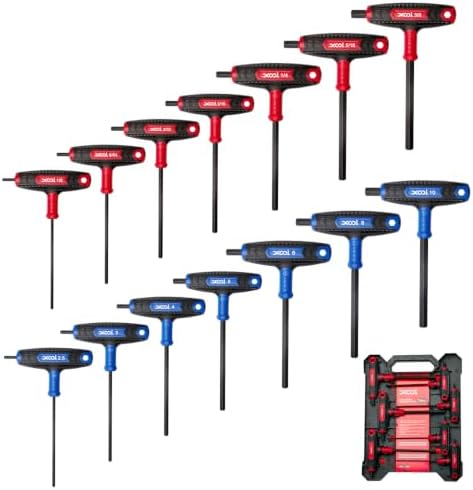
Storage habits solve the problem before fingers touch a bolt. Leaving each group inside its own dedicated holder or separate drawer keeps the two systems from crossing paths while you work. We assemble T handle hex keys in metric and inch options on our nut drivers, hex and Torx shelf so each measurement group stays in its designated rack right where you left it.
Check the markings before you lean into the turn
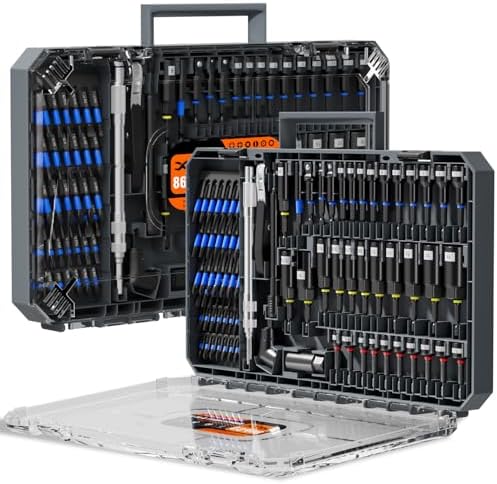
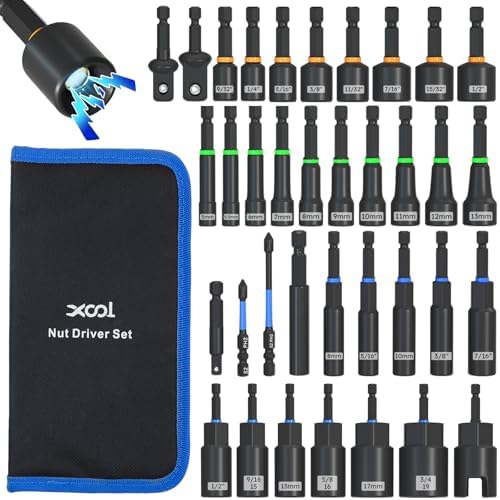
We separate our T handle hex keys into dedicated metric and inch sets on the nut drivers, hex and Torx shelf, right beside long Torx bits, security Torx options, magnetic nut drivers, and impact sets. If you are ever unsure which standard matches the hardware on your bench, check the sizes listed underneath to find the right fit.